Cutting boards: the complete guide

1. Materials — the 60-second map
| Material | Best at | Fails at | Verdict |
|---|---|---|---|
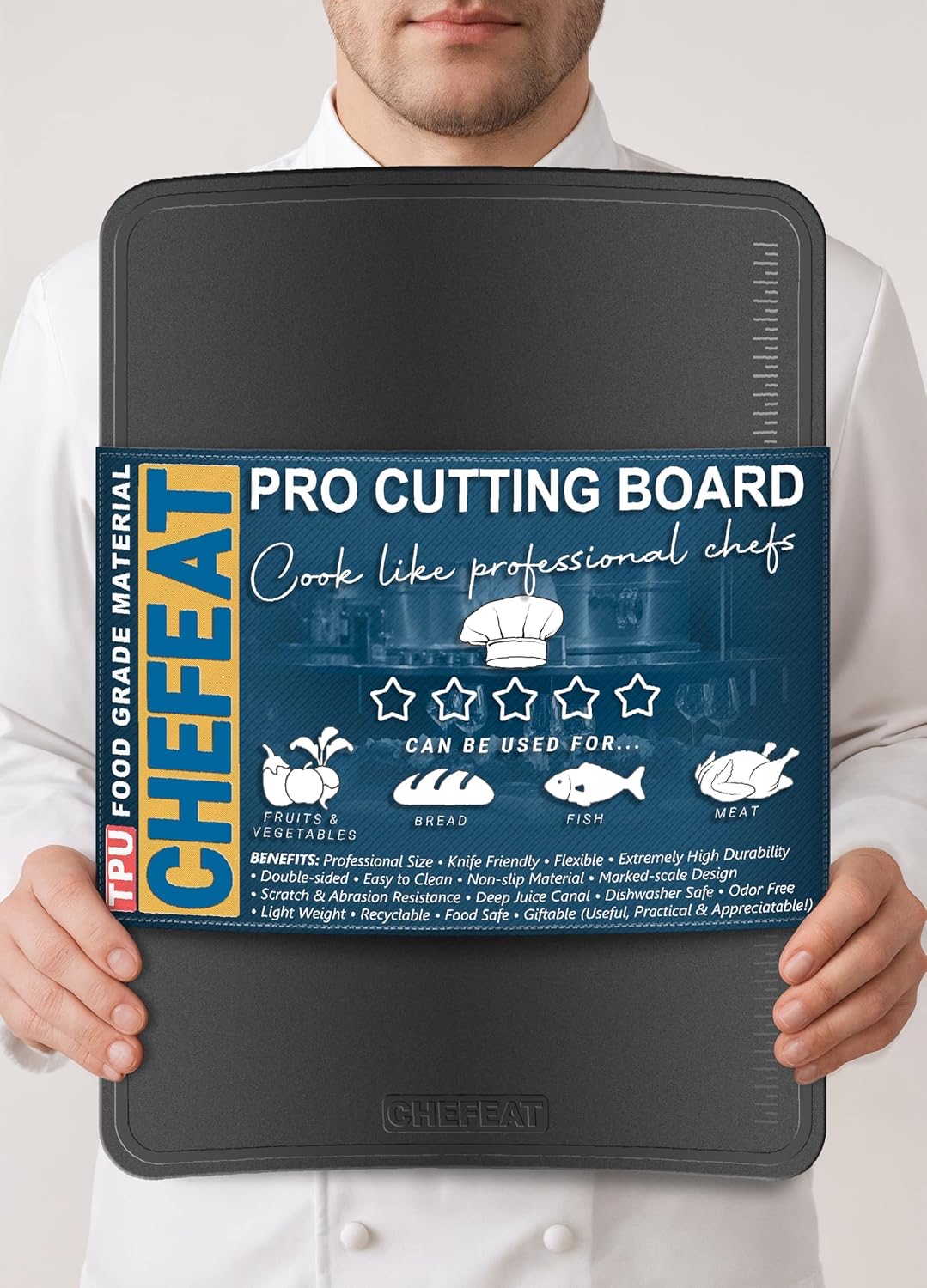
| TPU (elastomer) | daily work: knives, dishwasher, zero care, folds to pour | not a display piece | Everyday winner |
| Wood (end-grain) | beauty, serving, carving platform | dishwasher (never), oiling, weight, grooves | The showpiece |
| Hard plastic | price on day one | grooves fast → bacteria traps + microplastics | Short-lived |
| Glass | hygiene, looks clean | destroys knife edges; loud; shatters | Trivet, not a board |
| Bamboo | eco image, cheap serving | harder on edges than hardwood; glue lines split | Overrated |
| Titanium/metal | indestructible, sanitizes | metal-on-edge abrasion — knife killer | Wrong application |
Full scored breakdown (9 everyday factors, math shown): the best cutting board of 2026 → · deep dives: vs wood · vs plastic · vs glass · vs bamboo · vs titanium
2. Size — buy bigger than instinct says
Most kitchen mess is board overflow: onion halves rolling off, herbs migrating, four transfer trips per meal. Around 17 × 12 inches ends it — whole ingredients fit, and raw meat gets its own zone. The classic catch: rigid boards that size are heavy and skip the dishwasher. A flexible board that size stores in a slim gap and bends into the machine. Details: best extra large board →
3. One board or two?
USDA says: separate raw meat/poultry/seafood from produce. Two boards work; one double-sided board works better in small kitchens — juice-groove side strictly for meat, smooth side for everything else. Protocol: the raw-meat guide →
4. Care — by material, no folklore
- TPU / plastic / glass: dishwasher, done. After raw meat — full hot cycle (why the machine beats hands).
- Wood / bamboo: hand wash, dry immediately standing, oil monthly, never soak, never dishwash.
- Everything: the fingernail test monthly — if the nail catches in grooves, the board is finished. The 6 replacement signs →
5. Hygiene — the two rules that matter
① Grooves, not material, are the enemy — they hold residue through washing (USDA-based hygiene guide, the 3-property test). ② Worn plastic sheds microplastics into food — retire it early. Our board's lab reports (FDA, German LFGB, EU-BPA): certifications →
6. Where boards live beyond the kitchen
A flexible board's party trick — full size in use, flat or rolled in storage — makes it the default choice for boats, camping, RVs, small kitchens and restaurant lines. It's also the rare kitchen object that makes a genuinely used gift.
CHEFEAT Extra Large TPU Cutting Board17.3ʺ × 12.6ʺ · double-sided · dishwasher safe · 4.6★ · lab-tested
Buy on Amazon →Keep reading: